
The Hidden Contract Clause That Could Save Your Real Estate Business Thousands
Samy Basta, CPA • November 11th, 2025
What if I told you that 90% of businesses are adding one specific clause to their contracts right now that could be the difference between staying profitable or taking a massive hit to your bottom line?
If you’re in construction, architecture, interior design, property management, or any part of the real estate ecosystem, you cannot afford to ignore this growing trend.
We’re talking about tariff clauses in contracts. Before you click away thinking this sounds like boring legal jargon, stick with me. This single contract provision could literally save your business thousands, if not hundreds of thousands, of dollars.
Picture this scenario: You’re a construction company that just signed a contract to build a new apartment complex. You’ve quoted your client $2.5 million based on today’s material costs. Steel beams, lumber, smart home systems, all carefully calculated. Your margins are tight—a healthy but modest 12%—and you’re confident you’ll clear $300,000 in profit.
Two months into the project, tariffs hit. Suddenly, those smart home devices you’re installing jump 25% in price. The steel for your framework increases by 30%. Those beautiful Italian tiles your interior designer specified? They’re now luxury items with a 40% price increase.
Without the right contract language, you’re eating every penny of those increases. On a $2.5 million project, a 15% increase in material costs could mean $375,000 in unexpected expenses—completely wiping out your profit and putting you $75,000 in the red.
This isn’t some hypothetical doomsday scenario. This is happening right now across the real estate industry.
A recent industry study revealed that nine out of ten companies are scrambling to add tariff protection to their contracts. The reason is simple: tariffs aren’t temporary political theater anymore. They’ve become a persistent, unpredictable part of doing business.
Consider these sobering statistics:
The U.S. government collected $165 billion in tariff revenues in just the first eight months of last year. That’s not abstract government money—that’s cash that came directly from businesses importing goods or materials. According to Goldman Sachs analysis, U.S. companies are shouldering 64% of tariff costs, while consumers absorb only 22%. The rest gets spread across various parts of the supply chain.
For real estate professionals, this hits particularly hard because our industry relies heavily on materials and products from global supply chains. From Canadian lumber to Chinese electronics for smart home systems, from Italian marble to Mexican steel, international trade touches every aspect of what we build and manage.
Let’s break down the tarffis impact across our industry:
Construction Firms: Every nail, beam, and piece of equipment you use could see price swings. A mid-sized construction company working on a 50-unit residential development typically uses materials worth $3-5 million. A 20% tariff on steel and aluminum alone could add $600,000 to $1 million in unexpected costs. One construction firm in Texas reported that tariffs added $389,000 to a single project that was already under contract, completely eliminating their projected profit.
Interior Designers and Architects: Those specific materials you’ve carefully selected for clients? The unique fixtures from European manufacturers, the sustainable bamboo flooring from Asia, the custom millwork using imported hardwoods? Their prices could change dramatically mid-project. One interior design firm in California saw a high-end residential project’s material costs increase by $127,000 after tariffs were imposed on European lighting fixtures and Asian textiles, forcing awkward conversations with clients about who would cover the difference.
Property Management Companies: All those smart home upgrades, security systems, and maintenance equipment you’re installing across your portfolio are affected. A property management company managing 2,000 units and planning smart lock upgrades budgeted $400 per unit ($800,000 total) found themselves facing a $200,000 cost overrun when tariffs hit the electronic components. That’s money that could have gone toward property improvements or returned to investors.
Real Estate Technology Companies: The hardware components for smart locks, sensors, thermostats, and property management devices mostly come from overseas. A prop-tech startup developing smart building sensors saw their per-unit cost increase from $45 to $67—a 49% increase—destroying their carefully calculated pricing model and forcing them to renegotiate with every existing customer.
Engineering Firms: Specialized equipment, testing devices, and materials specified in your plans all face potential price volatility. An engineering firm designing HVAC systems found that tariffs on specialized components added an average of $47,000 to each commercial project, leading to disputes over who was responsible for the additional costs.
Think of a tariff clause like an insurance policy built directly into your contract. It essentially says, “If tariffs change and make our materials or products more expensive, here’s exactly how we’re going to handle it.”
These clauses aren’t complicated. They’re straightforward provisions that protect both you and your clients from unpredictable cost increases completely outside anyone’s control. Here’s what effective tariff clauses typically include:
The most common approach allows for automatic price adjustments when tariffs impact costs beyond a certain threshold. For example: “If tariffs increase project costs by more than 5%, contractor may adjust pricing accordingly with 30 days written notice.”
One general contractor in Florida uses a sliding scale: clients absorb the first 3% of tariff-related increases, the contractor and client split increases between 3-10% equally, and anything above 10% triggers a complete project re-evaluation. This shared-risk approach has helped them maintain client relationships while protecting their bottom line.
Smart contracts include provisions allowing for material substitutions when tariffs make specified products prohibitively expensive. “If tariffs increase specified material costs by more than 15%, contractor may propose equivalent substitute materials for client approval.”
An architectural firm in New York saved a client $240,000 by having the contractual right to substitute American-made steel for Chinese steel when tariffs made the original specification 35% more expensive.
Vague language leads to disputes. Successful tariff clauses specify exact percentages, timelines, and notification requirements. “Contractor must notify client within 10 business days of any tariff change affecting project costs by 5% or more, providing documentation of price increases and proposed solutions.”
The best clauses require clear documentation of tariff impacts, protecting both parties from arbitrary price increases. This typically includes providing copies of supplier price increase notices, government tariff schedules, and comparative pricing from multiple sources.
A real estate developer in Atlanta included comprehensive tariff clauses in all contracts starting in 2018. When tariffs on Chinese goods increased in 2019, their projects faced $2.3 million in potential cost overruns across their portfolio. Thanks to their tariff clauses, they successfully passed through $1.4 million to clients, negotiated material substitutions saving $600,000, and absorbed only $300,000—preserving most of their profit margin while maintaining client relationships.
Case Study 2: The Prepared Property Manager
A property management company overseeing 5,000 units added tariff adjustment clauses to all vendor contracts and owner agreements. When smart home device costs increased 22% due to tariffs, they were able to adjust their capital improvement budgets accordingly, passing through costs to property owners with full transparency. Not a single owner objected because the contractual framework was clear from the start.
An interior design firm specializing in luxury residential projects started including detailed tariff provisions after losing $73,000 on a single project. Their new contracts include a “tariff impact assessment” at the design phase, identifying potentially affected materials and establishing substitution options upfront. They’ve since completed 14 projects with tariff-related cost increases, maintaining their margins on all of them.
Adding tariff protection to your contracts doesn’t require a law degree or extensive legal knowledge. Here’s a practical approach:
Step 1: Audit Your Current Contracts: Review all active contracts and templates. According to industry data, 48% of businesses report feeling overwhelmed by the volume of contracts requiring review. Don’t be part of that statistic. Start with your largest or most material-dependent contracts first.
Step 2: Identify Your Exposure: Calculate what percentage of your costs come from potentially tariff-affected materials or products. Construction firms typically see 40-60% of project costs in materials, while property management companies might see 15-25% in affected equipment and supplies.
Step 3: Develop Standard Language: Create standard tariff clause language for different contract types. A construction contract needs different provisions than a property management agreement or an architectural services contract. The key is consistency and clarity.
Step 4: Communicate Transparently: Clients actually appreciate transparency about potential cost volatility. When you explain that tariff clauses protect both parties from unpredictable government actions, most clients understand and accept these provisions. In fact, sophisticated clients often expect them.
Step 5: Monitor and Adjust: Tariff policies change rapidly. What works today might need adjustment tomorrow. Companies that regularly review and update their contract language report 73% fewer disputes related to cost increases.
Why does this matter right now? We’re in a perfect storm of factors that make tariff clauses absolutely critical:
Trade policies can shift with elections, international relations, and economic pressures. Recent court challenges to existing tariffs have created additional uncertainty, with potential refunds for some businesses but also the possibility of new tariffs being imposed.
Global supply chains remain fragile following recent disruptions. When combined with tariff uncertainty, this creates a double whammy of potential cost increases.
With inflation already squeezing margins, unexpected tariff costs can be the difference between profit and loss. Real estate businesses operating on typical margins of 10-20% can’t absorb significant unexpected cost increases.
The average real estate business manages 40% more contracts today than five years ago. Each one represents potential exposure to tariff-related losses without proper protection.
One clause. That’s all it takes to protect potentially hundreds of thousands of dollars. While contracts might not be the most exciting part of running a real estate business, this is the kind of strategic thinking that separates successful companies from those that struggle with every market change.
The real estate professionals who thrive in today’s environment aren’t just the hardest workers—they’re the ones who work smart with the right protections in place. Tariff clauses aren’t about being pessimistic or expecting the worst. They’re about professional risk management that protects your business, your clients, and your projects.
Look at every contract you’re about to sign. If it doesn’t have tariff protection language, add it. The time invested now could save you from catastrophic losses later. In an industry where margins matter and every percentage point counts, can you really afford not to protect yourself?
Remember, in today’s market, it’s not just about building great projects or managing properties efficiently. It’s about building a resilient business that can weather whatever changes come your way. Tariff clauses are just smart business, and smart business is what keeps you profitable and growing, no matter what happens in the global economy.
Your clients rely on you to deliver quality work at agreed-upon prices. You rely on your contracts to protect your ability to do just that. Make sure those contracts are working as hard as you are.
Make sure you understand how tariff exposure could affect your bottom line. Talk with your CPA to review your contracts and assess whether tariff protection language is appropriate for your situation.
If you don’t currently have a CPA who understands construction, development, or real estate, we’re here to help.
You can book a consultation with us at Basta & Company, where we work with builders, designers, architects, engineers, developers, property managers, and real estate professionals across California to protect margins and strengthen long-term financial resilience.
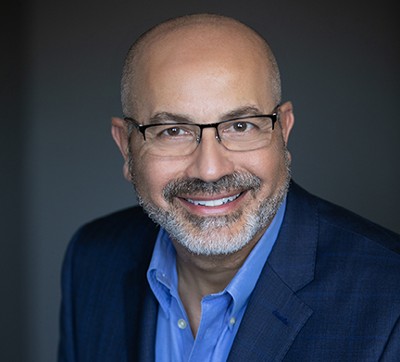
Samy Basta brings you more than 20 years experience in tax, financial, and business consulting to his role as founder of Basta & Company. His focus is primarily strategic business planning, empowering clients to set priorities, focus energy and resources, and strengthen operations. In addition, Samy and his firm provide strategic counsel, and technical insight, on a wide range of needs, including tax saving strategies, tax return compliance, as well as choice of entity.




100 Pine Street, Suite 1250
San Francisco, CA 94111