
Is an Opportunity Zone Right for You in 2025? (OBBBA Edition)
Samy Basta, CPA • October 23rd, 2025
The One Big Beautiful Bill Act (OBBBA) made the Opportunity Zones (OZ) program permanent.
The powerful 10-year tax-free growth still applies.
Gain deferral remains, but now you must recognize the deferred gain no later than year 5 (or earlier if you sell).
After 5 years you get a step-up in basis: standard QOFs get 10%, rural funds (QROFs) can get 30%.
Reporting and compliance got tougher. Choose your fund and sponsor carefully.
Translation? You still get major benefits, but the timing and compliance pieces now sit in the driver’s seat.
Here’s a clear breakdown of the major shifts under OBBBA and how they affect OZ strategies.
Previously the OZ program faced a sunset date for new investments. OBBBA removes that sunset and makes the program permanent. That means you can still elect deferral after 2026 if you meet the rules.
Under the older rules you deferred until a fixed cut-off date (previously December 31 2026). Under the new rules you’ll recognize the deferred gain at the earlier of: sale of the QOF interest or five years after investment. That means you must plan for the year-5 recognition point.
For standard QOFs you get a 10% basis step-up after holding five years. For rural investments (Qualified Rural Opportunity Funds, QROFs) you get a 30% step-up. That means if you invest with the right structure and geography you can reduce recognized gain by up to 30% at year-5.
If you hold your investment for more than 10 years, post-acquisition growth can be excluded. Under OBBBA there is also a holding cap: for many investments growth exclusion maxes out after around 30 years. The long-term upside remains very strong, but it’s a long-game.
OBBBA beefs up the reporting obligations for the fund (QOF) and its operating business (QOZB). It also tightens the eligibility of zones (for example, rural vs urban definitions) and increases penalties for non-compliance. Simply put: you can’t rely just on the tax break; you must pick sponsors who have the discipline to report and comply.
These strategies don’t fit everyone, but when they fit, they’re compelling. Here are the roles and situations that tend to align:
Developers who realize capital gains and have patience.
General contractors / subcontractors tied to funded multi-phase pipelines in OZs.
Property managers who can operate value-add assets over a decade.
Architects, engineers, designers who are attached to QOF-backed projects.
Proptech teams or investors who have realized gains from a sale (or secondary) and want a tax-smart real-asset allocation.
If you need your cash back in two-three years, or you’re chasing only a tax break (without investment discipline), this may not be right. In short: big gains + long horizon + operational commitment = good fit.
Below are three illustrative examples (numbers are hypothetical) so you can see how the rules flow.
You sell a mixed-use asset and realize a $1,000,000 capital gain.
You roll it into a QOF in 2027.
By 2032 (five years), you must recognize the deferred gain (unless sold earlier).
At year five you get a 10% step-up = $100,000.
Suppose the fund’s value at year five is $1,050,000.
From basis point of view: fair market value (1,050,000) minus step-up (100,000) = $950,000. That becomes the recognised gain (because it’s the lesser of deferred gain or FMV-basis).
Recognized gain: $950,000 (instead of $1,000,000).
At a 20% long-term capital gains rate, that’s roughly $10,000 saved permanently at that point, plus you kept the deferral for five years.
Then you hold to year 10. If value rises to, say, $1,800,000, the post-acquisition growth (from 1,050,000 to 1,800,000 = $750,000) could be excluded entirely.
You exit a small portfolio and get a $2,000,000 gain.
Invest in a QROF (rural).
At year five you get a 30% step-up = $600,000.
Suppose FMV at year five: $2,200,000. Subtract $600,000 = basis for recognition $1,600,000.
Recognized gain: $1,600,000 (less than full $2,000,000). That’s $400,000 less recognized gain. At 20% tax rate = ~$80,000 saved permanently, plus five years of deferral.
Then you keep holding: the growth after year five can be excluded if held to year ten (and beyond).
A property manager teams with a QOF to rehab a 120-unit complex inside an OZ. Plan: modest renovation plus operational improvements, ten-year hold.
Target: push net operating income (NOI) by $450 per unit per year via occupancy, collections, expenses. At a 5.75% cap rate that creates ~$540,000 value on stabilization.
Then you hold 10+ years, sell, and the post-acquisition appreciation qualifies for the 10-year benefit.
Not flashy. But practical and aligned with long-term tax-advantaged strategy.
Ask yourself these three questions. If you answer “yes” to all, OZs likely fit. If you answer “no” to any, walk away or consider something else.
Do you have capital gains to roll?
Can you hold the investment 10 or more years?
Are you okay with project risk and tighter reporting/compliance?
If you answered “no” to any of those, then standard deals (non-OZ) might make more sense. There’s no shame in that.
Here’s a checklist I share with clients as a San Francisco-based CPA providing CFO and strategic tax services in the Bay Area.
Who runs the fund? What’s their track record in OZs?
Do they have experience with multi-phase deals, value-add projects, or rural developments?
How real is the pipeline of projects? Not just promises.
Demand, rents, cost basis, debt assumptions, contingency.
Don’t let the tax tail wag the deal dog: the underlying real estate/investment must make sense on operating metrics.
Especially in rural zones, check infrastructure, talent pool, exit markets.
Ask for their fund’s reporting plan: how will they handle the new OZ reporting requirements?
Audit readiness, transparency, investor data room. If they wince at compliance talk, walk.
Model year-5 recognition (you must recognize deferred gain by year five).
Model year-10 exit benefit (for the growth exclusion).
Know when your liquidity point is, and when the clock begins.
If pursuing rural step-up (30%), verify rural tract qualification before underwriting.
With the OBBBA rolling redesignation every 10 years, confirm the census tract qualifies and will continue to do so.
Avoid “just because it has OZ in the pitch” tracts. Check fundamentals.
Here are ways OZ strategy can align with professionals in these fields:
Construction / GCs / Subs: OZ equity can help fund multi-phase work, create steadier backlog.
Architects / Engineers: Projects in OZs may get more capital, opening more scope when equity is tax-efficient.
Interior Designers / Hospitality: Mixed-use or hospitality refreshes in OZs benefit when capital stack improves via OZ.
Developers: Combine OZ benefits with other credits (LIHTC, Historic Tax Credit, ITC) when the stack aligns.
Property Managers: A long-hold OZ structure means you operate like an owner, not just landlord.
Proptech / Investors Post-Sale: If you’ve realized gains, OZs give you a real-asset, inflation-hedged allocation option with tax efficiency.
The Opportunity Zone program didn’t go away, it matured. The OBBBA made it permanent, introduced stronger incentives (especially in rural zones), and raised the bar on process and compliance.
You still get powerful tax advantages, especially if you can hold 10+ years. The catch? You must plan for the year-5 recognition, pick the right sponsor, verify the zone, and lock in the strategy.
Want help running the numbers on a live deal?
If you have a recent or upcoming capital gain, and you’re looking for a strategy beyond “just pay the tax,” we should talk. As a San Francisco CPA offering CFO-level strategic financial insight, I model the year-5 recognition and year-10 exit, stress test rents, and review sponsor compliance so you can make a clean, confident call.
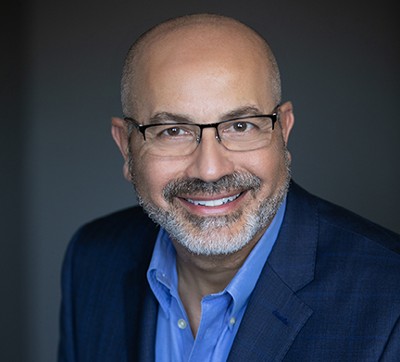
Samy Basta brings you more than 20 years experience in tax, financial, and business consulting to his role as founder of Basta & Company. His focus is primarily strategic business planning, empowering clients to set priorities, focus energy and resources, and strengthen operations. In addition, Samy and his firm provide strategic counsel, and technical insight, on a wide range of needs, including tax saving strategies, tax return compliance, as well as choice of entity.




100 Pine Street, Suite 1250
San Francisco, CA 94111